What are the quick signs?
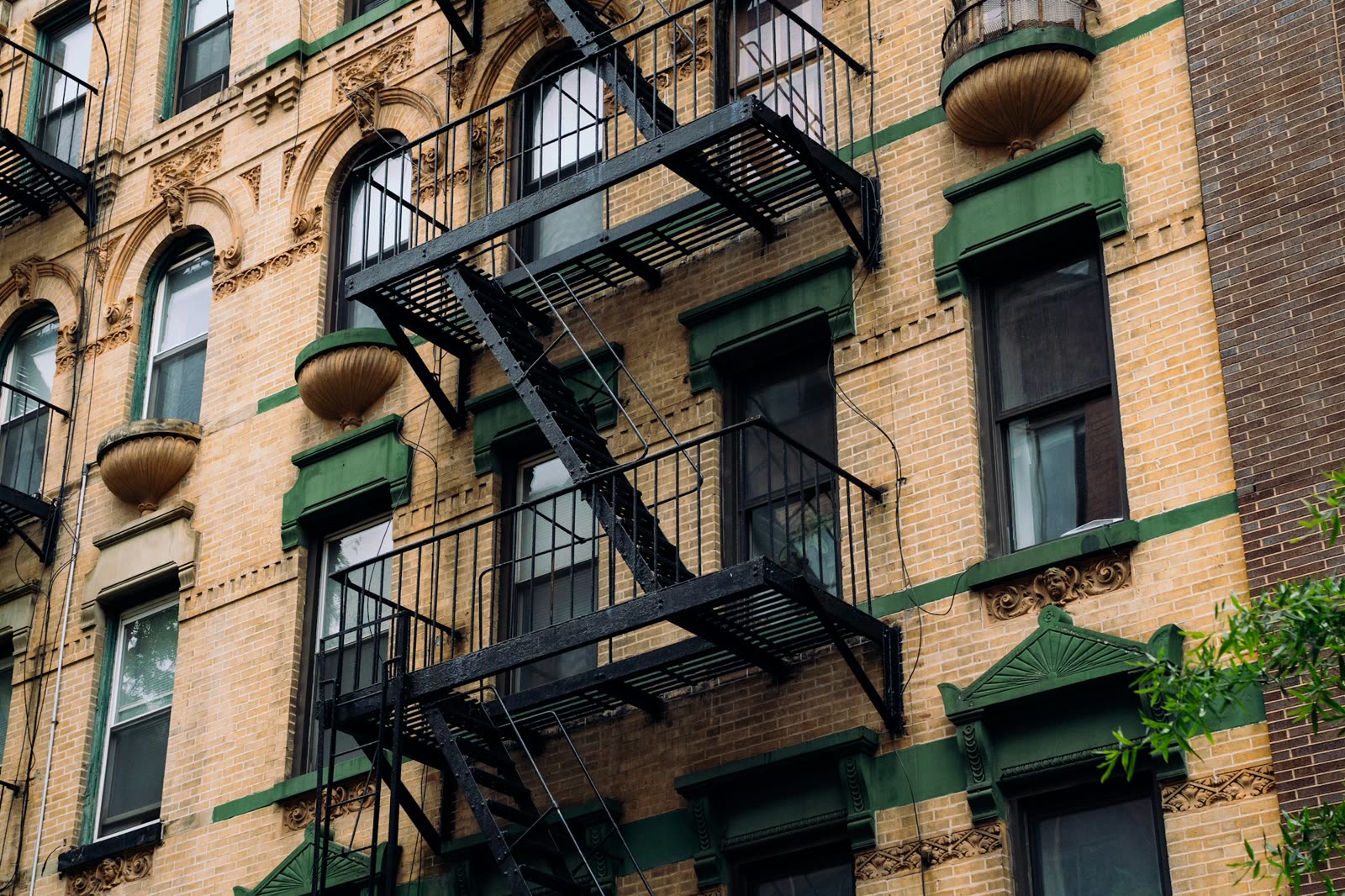
- The building is old and big enough. Six or more apartments, built before 1974. Most stabilized apartments are in buildings like this.
- The landlord gets a tax break. Some newer buildings are stabilized because the owner gets a tax break from the city. The lease has to say so. Look for "421-a" or "J-51" in it.
- The lease has a rent stabilization rider. A stabilized lease comes with a few extra pages that show what the last tenant paid and how your rent was worked out.
- The rent is an odd number. Something like $2,186.43 instead of $2,200.
An old building isn't a guarantee. Until June 2019, a landlord could take an apartment out of stabilization once the rent got high enough. The law ended that, but apartments that left before then stayed out.
How do I check a listing before I apply?
Look the address up in the state's building search. It lists buildings that have registered stabilized apartments. Treat it as a hint. It shows buildings, not which apartments in them are stabilized, and the state says the list isn't the final word.
You can't get the rent history for a place you don't live in yet, because the state only mails it to the current tenant. So ask the broker in writing, and ask to see the rider before you sign.
I already live there. How do I check?
Ask the state housing agency, HCR, for your apartment's rent history. It comes by mail.
- Fill in the online form and choose "Apartment rent history".
- Or email rentinfo@nyshcr.org with your full address and apartment number.
- Or call 833-499-0343.
How do I read the rent history?
It's a list of what the landlord told the state your apartment's rent was each year. Look for two things.
- Is it still listed as stabilized? If a year says "Permanently Exempt", the landlord told the state the apartment left stabilization.
- Did the rent jump? A stabilized rent should only go up by a small set amount each year, plus approved increases when the landlord renovates. A big jump with no explanation is worth questioning.
If you pay less than the "legal rent" on the history, your increases are based on what you actually pay.
How much can my rent go up?
A city board sets the number every year. For leases that start between October 1, 2026 and September 30, 2027 it is 0%, a rent freeze, for both one-year and two-year leases.
| Lease starts | 1-year lease | 2-year lease |
|---|---|---|
| Oct 2026 to Sep 2027 | 0% | 0% |
| Oct 2025 to Sep 2026 | 3% | 4.5% |
| Oct 2024 to Sep 2025 | 2.75% | 5.25% |
These limits cover new tenants too, not just renewals.
What else does it get me?
The right to stay. Your landlord has to offer you a new lease 90 to 150 days before yours ends, and you pick one year or two. You get 60 days to sign. You can only be evicted for reasons the law allows.
What if I'm paying too much?
File an overcharge complaint with the state using its complaint form. If the state agrees, it can order the landlord to refund up to six years of overcharges, and triple the amount if the landlord did it on purpose.
Not sure where you stand? Call 311 and ask for the Tenant Helpline.
What should I text the broker?
Hi, I'm interested in [address, apartment]. Is this unit rent stabilized? If it is, will the lease come with the rent stabilization rider? Thanks.
This is general information, not legal advice.
Sources
- NYC Rent Guidelines Board, Order #58: 0% for 1- and 2-year leases starting Oct 1, 2026 to Sep 30, 2027, adopted June 25, 2026
- HCR Fact Sheet #26 (07/2026): NYC guideline rates by year, rates apply to vacancy and renewal leases, preferential rent, improvement increases, 2% cap, lease rider, six-year lookback
- HCR Fact Sheet #1: which buildings are covered, tax-benefit buildings, 2019 end of high-rent deregulation, six-year review, treble damages
- HCR Fact Sheet #4: renewal offer timing, 60-day window, 1- or 2-year choice, lease rider with renewals
- HCR Fact Sheet #41: 421-a, J-51, J-51 R and 485-x coverage, tax-benefit lease notices
- HCR Guide to Understanding Registration Apartment Information: rent history shows April 1 rents, "Permanently Exempt" status
- HCR Office of Rent Administration: inquiry form, phone number, building search
- HCR Rent Increases and Rent Overcharge: Form RA-89, online filing, treble damages
- HCR Rent Regulated Building Search: buildings registered since 1984, list not determinative
- Rent Guidelines Board building lists: 2024 registrations, no unit-level data
- Rent Guidelines Board FAQ: lease rider requirement, condo and co-op exception, HCR online form
- NYC.gov Rent Stabilization: six or more units built before 1974, how to request rent history, mailed only to the tenant, 311 Tenant Helpline